How Society Combats Corporate Tax Avoidance
Tax avoidance is using legally permitted measures to pay the lowest amount of money possible. Avoidance is different than tax evasion. Tax evasion involves a corporation resorting to illegal activities to pay fewer taxes. Tax avoidance causes governments to lose over $170 billion in lost revenue each year, but what’s being done against this?
What Does Tax Avoidance Involve?
Although tax avoidance involves legal actions, public opinion sees such avoidance as unethical. Corporations which take part in tax avoidance receive backlash from once loyal customers and user communities online. Methods of tax avoidance include manipulating the company’s country of residence, legal entities, tax shelters, or transfer mispricing. Both tax evasion and some forms of tax avoidance can be seen as tax noncompliance.
What Is Being Done?
Since tax avoidance greatly reduces government revenue, many countries are framing tax rules to lessen the scope of avoidance. Australia, Canada, New Zealand, South Africa and Norway are just some of the countries to introduce the “General Anti-Avoidance Rules” also known as GAAR. In the United States, the Internal Revenue Service (IRS) helps determine which corporate schemes are abusing the system. US Court case Gregory v. Helvering helped to establish judicial doctrines which assist in this area.
Final Thoughts
Tax avoidance is considered by the public as dodging one’s obligations toward society. When big corporations perform tax avoidances, it is the citizens who suffer the consequences. In the last few years, there has been an increased government response to avoidances and this will only continue to grow in the future.
Image credit: Anthony Easton
What Types of Fees can Freelancers Write-Off as Business Expenses?
One of the benefits of working for yourself is that you can write-off expenses which you would not ordinarily be able to write-off. Things which would otherwise typically be categorized as a luxury item wind up not being a burden. In this article we will cover the types of things freelancers can write-off on your taxes as a business expense.
Equipment Related To Running Your Business
As a freelancer, you can usually write-off equipment that you purchase to run your business. You can usually write-off the cost of your computer, your internet service, your phone service, and your phone itself. If you make clothes, you could write-off the purchase of your sewing machine and fabric. If you use your car in your business, you can write-off your mileage.
Service Provider Fees
You can also write-off the fees you pay to service provider who confer benefits to your business. For instance, as a freelancer you can write-off fees that you pay to your attorney and your accountant.
Educational Fees
You can deduct fees for training. This includes seminars, workshops, books, and DVDs that you purchase to help you stay on top of your field.
Home Office Deduction
You can also take a tax deduction for the portion of your home that you use for your business. This section of your home can only be used for business if you plan to take this deduction.
Running your own business from home can be challenging. You do have to invest a certain amount of money up front. These deductions can help put some of that money back in your pocket.
Image credit: StockMonkeys.com
The Basics of Claiming Non-Reimbursed Work Related Purchases
If you are employed, it is not advisable to take on work-related expenses which your employer should pay. You should not pay them, and your employer should reimburse you for the expense in question. However, should you find yourself in this position, know that you may be able to deduct work-related purchases from your taxes.
Things to Know About Claiming Non-Reimbursed Work Expenses
- Non-reimbursed work expenses are deductible much the same as if you were self-employed. Each expense you incur is subject to the same tax regulations as a business expense for someone who is self-employed.
- The expenses must be ordinary, necessary, and reasonable. There are special rules for other expenses, but they must apply in maintaining or improving the skills in your current job.
- Deductions for an employee’s related job expenses are limited. You can only claim the expense if it is more than 2-percent of your adjusted gross income. Anything below that, you cannot claim. The more your adjusted gross income is, the lower you can claim. Thus, it is recommended that you avoid making purchases for which your employer will not reimburse you.
To help you avoid claiming expenses for non-reimbursed work related purchases, it is best to review your employer’s reimbursement policy. Always be sure to claim from your employer any expense that you incur for your job. If you fail to do so, you will not be allowed to claim it as a deduction. Employees should never pay out of pocket for something which is necessary on the job.
Image credit: Andres Rueda
Why 21% of Small Businesses File Their Taxes Offline
Recent polls suggest that roughly 21-percent of small business owners are doing their taxes themselves, without an accountant. They are also not using available online tax preparation software. For a business, with multiple pages of itemizations, this can be a recipe for disaster.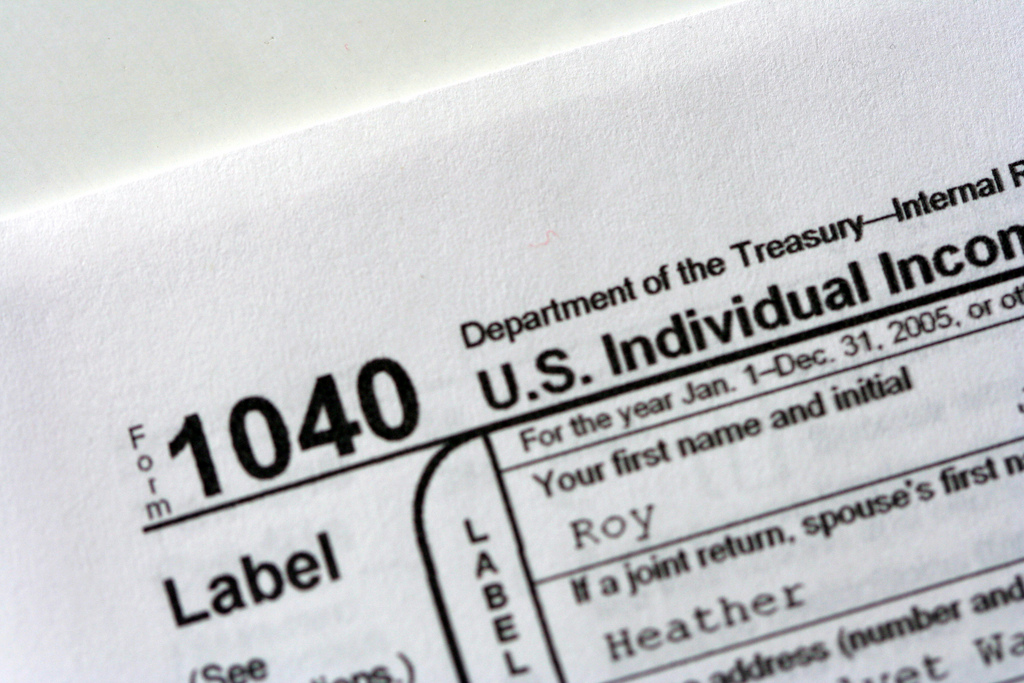
Higher Rate of Audit
Anytime that figures are completed on your own, and without the help of a professional, it is likely that you will be subject to an audit. This is mostly due to incomplete itemizations, missed credits or whole sections of missing information.
Greater Risk for Mistakes
There is a greater risk associated with filing your own small business taxes. Transferring numbers, forgetting a receipt or miscalculating an expense can throw the entire return off. Not to mention, you are already overworked and tired, mistakes are bound to happen.
Not Using Advanced Technology
Many small business owners are still keeping files of papers and boxes of paper receipts for tax purposes. Technology exists that can create a paperless system. Of course, you could still store documents in physical paper form, but consider scanning receipts into a cloud network and categorizing them for tax time. This will make your expenses easier to sort and calculate. It will also create efficiency and save time.
Businesses have to be meticulous when keeping records and should use the assistance of an accountant to prepare their taxes. Tax software programs and simple accounting software available to use throughout the year make filing taxes easy for small businesses. Using technology actually can create accurate shortcuts for humans.
Image credit: John Morgan


