How Your CPA Can Help You Avoid Tax Scams

Avoiding Tax Scams
Whether your realize it or not, throughout the year, your company is at risk of several types of scams, including financial scams, tax scams, non-profit scams and even identity fraud scams. Despite this veritable avalanche of fraudulent activity, there are ways that your CPA can help you avoid tax scams at no extra cost to you. Here are three of these ways:
Here are three of these ways:
Your CPA Can Encourage You to File Early
Those who generally wait until the last minute to file their taxes are at more risk being scammed than any other group. This is often because those who are scamming you will file early in the hope of obtaining your refund before you do. The sooner you file each year, the greater are your chances of being able to avoid tax scams.
Help You Watch Out For Phishing
Taxpayers should always be on the lookout for potentially fraudulent or fake emails which are created specifically to steal your information. One important note to always remember is that the IRS will never contact you via email. When in doubt, always pick up your phone and call the IRS directly.
Discourage the Use of Non-Certified Preparers
There are lots of dishonest tax preparers who are readily available throughout tax season to provide assistance to you. These dishonest preparers usually work to steal your identity or steal your refund, and if you’re not careful, they could put you at risk for other fraudulent behavior.
Has your CPA worked with you in other ways to help you avoid tax scams? We want to hear all about it. Leave your comments below.
Image credit: Alachua County
How to Spot IRS Posers
IRS
Hackers, fraudsters, and scammers are among the top reasons many people lose money in the world. The Internal Revenue Service (IRS) warns that people may be after your sensitive information and may contact you impersonating an IRS agent.
Here are warning signs that the IRS is not contacting you:
- You receive a call demanding immediate payment. The IRS never calls you about your taxes without first mailing out a bill. They usually follow up a month after sending it, so you’ll have an advanced notice if they would be calling you about it.
- Receive a call or letter demanding you pay taxes and they don’t offer you with a choice to question or appeal the stated amount owed.
- Demanding payment via prepaid visa debit card or western union. The IRS will never limit your payment options to these and it’s often a sign of a scammer.
- Requesting sensitive information such as social security number, credit or debit card number is not a policy of the IRS. They request payment either through mail or via their website. If you’re asked to pay over the phone, it’s a scammer.
- Receiving phones calls threatening local police or law-enforcement agencies on you if you refuse to pay. The IRS will take you to court if they want to take action against you, so don’t listen to anyone on the phone threatening to send you to jail. They are a scammer.
These are the most efficient tips to help you watch for scammers and fraudsters who are only interested in stealing your sensitive security information. The IRS will always send a letter out to you if they need correspondence. If you feel you’re unsure if it’s the IRS contacting you, it’s best to call and ask if they sent the letter to your home.
Image credit: mohanrajdurairaj
What to do When Someone Else Claims Your Tax Return
Identity theft is unfortunately something which occurs rather frequently. One form of identity theft involves a thief falsely claiming someone else’s tax return as their own. Identity thieves file tax returns using false information and documents. It makes it nearly impossible for the real person to file their tax returns, and in some cases it causes the victim to experience a significant delay in processing their return. Here are a few things you should do if someone happens to fraudulently claim your tax return.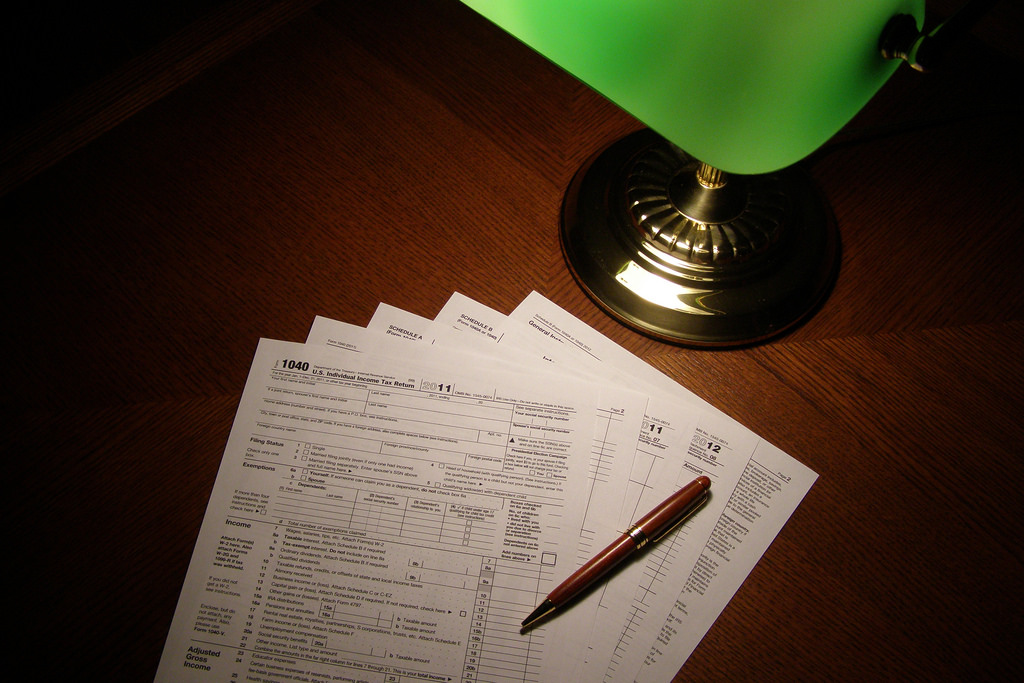
Report Tax Fraud to the IRS
If you receive a notification that a tax return has already been filed for your social security number, contact the IRS immediately. You may be placed on-hold, but it is important to wait on-hold until it is your turn in line. Explain to the representative that you tried to file your taxes but received a notification that a return was already filed – but you did not submit the return.
Gather Proof of Identity Documents
The IRS is going to ask for documentation to prove your own identity. It seems a bit much, but they have to be sure that you are not trying to defraud them. You will be asked to provide documents like birth certificates, copies of photo IDs, copies of social security cards and possibly employment records.
Closing Thoughts
Once you have the list of requested information from the IRS, gather it quickly, and send it off. The faster the IRS receives your documents, the faster they can process the fraud claim. Now, if someone has claimed you as a dependent on their return but you are not a dependent, the same set of documents is likely to be requested.
Image credit: Chris Potter
How Society Combats Corporate Tax Avoidance
Tax avoidance is using legally permitted measures to pay the lowest amount of money possible. Avoidance is different than tax evasion. Tax evasion involves a corporation resorting to illegal activities to pay fewer taxes. Tax avoidance causes governments to lose over $170 billion in lost revenue each year, but what’s being done against this?
What Does Tax Avoidance Involve?
Although tax avoidance involves legal actions, public opinion sees such avoidance as unethical. Corporations which take part in tax avoidance receive backlash from once loyal customers and user communities online. Methods of tax avoidance include manipulating the company’s country of residence, legal entities, tax shelters, or transfer mispricing. Both tax evasion and some forms of tax avoidance can be seen as tax noncompliance.
What Is Being Done?
Since tax avoidance greatly reduces government revenue, many countries are framing tax rules to lessen the scope of avoidance. Australia, Canada, New Zealand, South Africa and Norway are just some of the countries to introduce the “General Anti-Avoidance Rules” also known as GAAR. In the United States, the Internal Revenue Service (IRS) helps determine which corporate schemes are abusing the system. US Court case Gregory v. Helvering helped to establish judicial doctrines which assist in this area.
Final Thoughts
Tax avoidance is considered by the public as dodging one’s obligations toward society. When big corporations perform tax avoidances, it is the citizens who suffer the consequences. In the last few years, there has been an increased government response to avoidances and this will only continue to grow in the future.
Image credit: Anthony Easton
5 Celebrities Who Have Been Jailed for Not Paying Taxes
Avoiding taxes is not confined to those who identify as middle or working class. There are many people who are or were wealthy who have attempted to avoid paying any taxes. Here is a list of five famous (or infamous) people who have been jailed for trying to avoid paying their fair share to Uncle Sam.
John Gotti
John Gotti is one of the most famous people who have ever been sent to jail because of taxes. One of the reasons he is so famous for the tax evasion arrest is because the government was trying him on major charges as a mobster. The tax issue was the only thing the government was able to prove, however, and so this issue was used to put him behind bars.
Heidi Fleiss
One of the curiosities about the case of Heidi Fleiss is that she was jailed for taxes even though her business of being a madam was an illegal one. The government has determined that no matter how you get money, legal or illegal, you must still pay taxes on your income.
Wesley Snipes
Snipes was one of the biggest actors in Hollywood and also had one of the largest tax debts during the height of his fame. Wesley owed the government around 17 million in taxes at the time. He was sentenced to three years in federal jail in 2008.
Ja Rule
Rapper Ja Rule rode the billboards in the early 2000s with his label Murder Inc., however, he was sentenced to jail in 2013 for not paying his fair share of taxes during his time in the limelight.
Lauryn Hill
Known for her soulful songs, it was a shock when Lauryn Hill was sentenced to 3 months in jail over her 1-million-dollar tax bill in 2013. In 2014, she received yet another tax bill to work out.
Image credit: meesh


